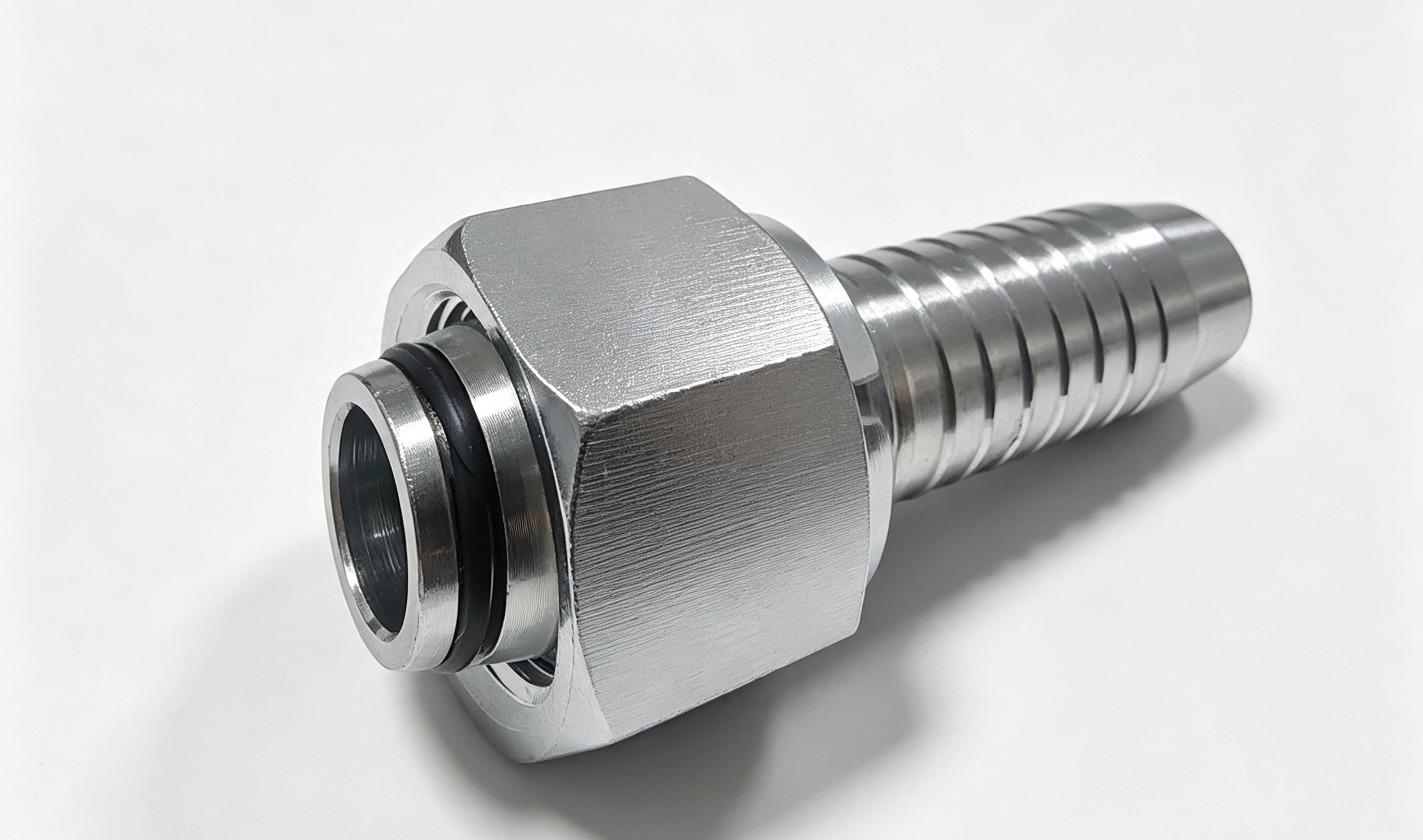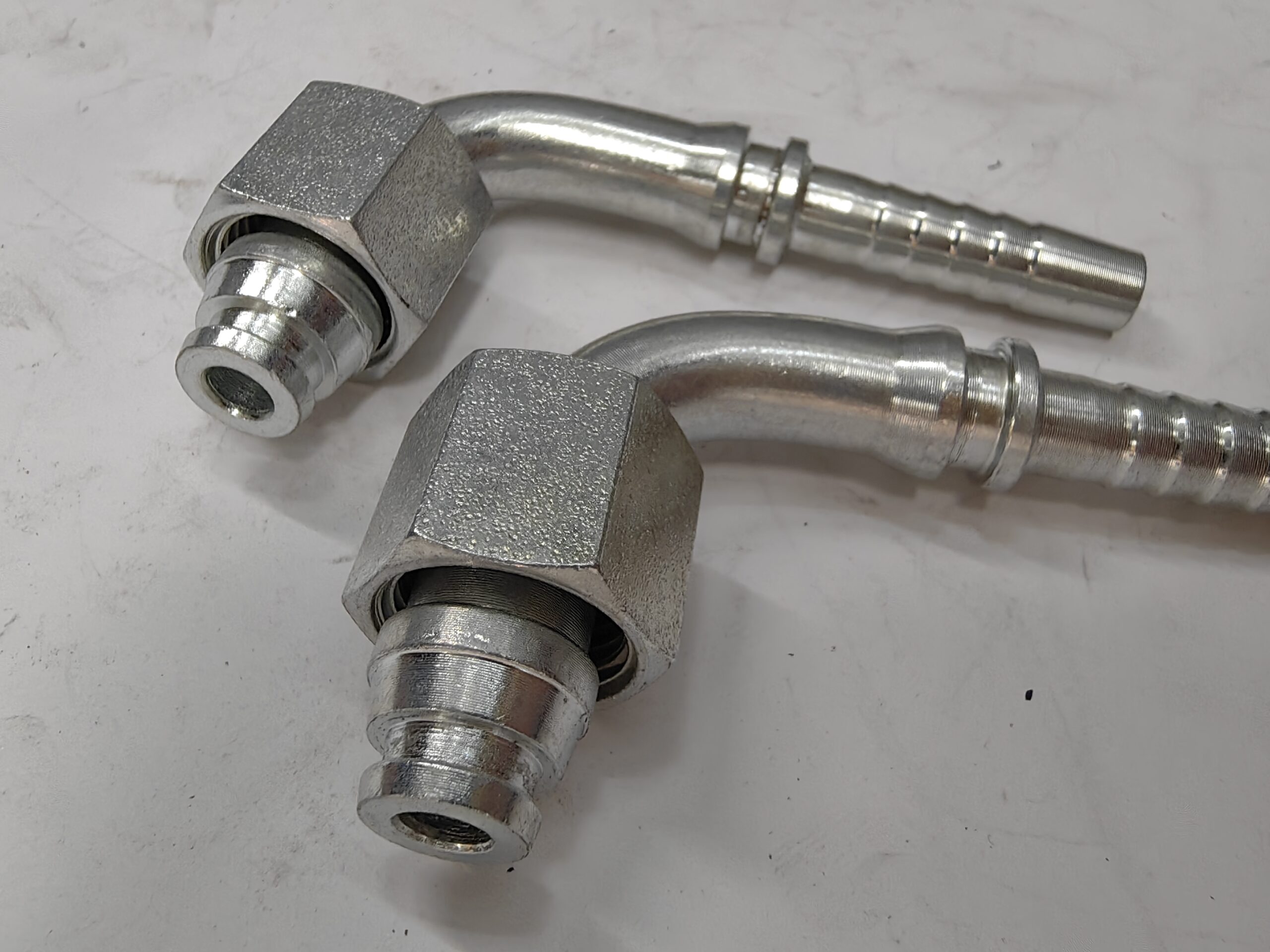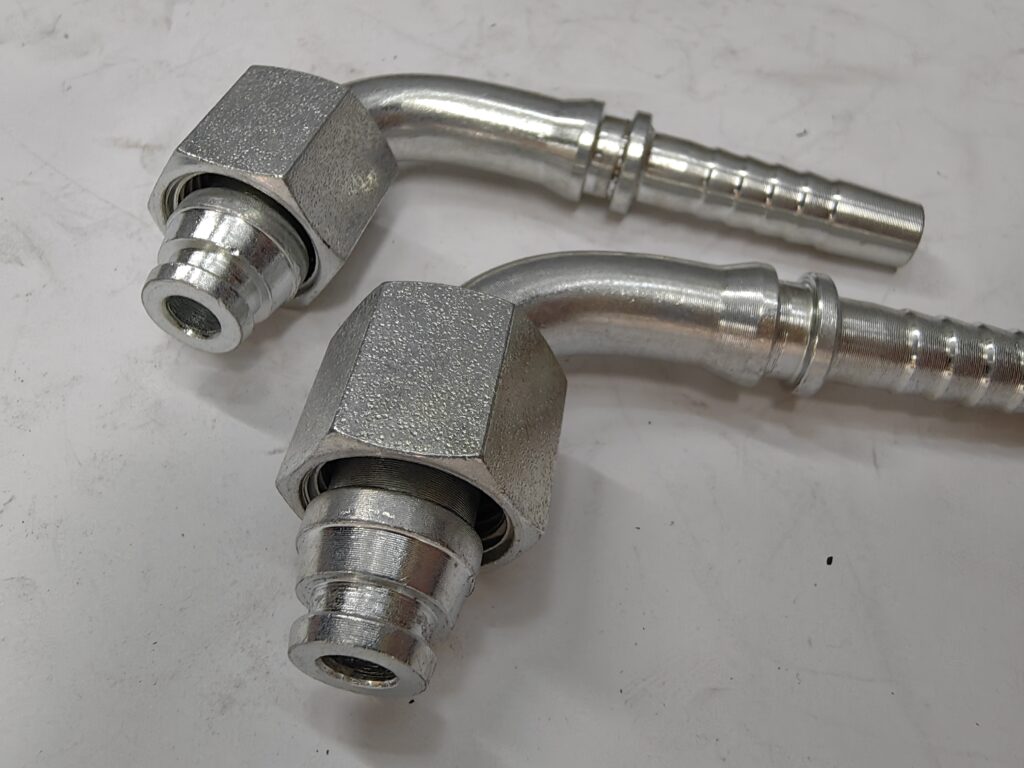
Hydraulic thread fittings are the most fundamental components in agricultural machinery, construction equipment, and industrial hydraulic systems. Different thread standards cannot be mixed randomly. Incorrect matching will cause oil leakage, system pressure drop, vibration failure, and even equipment damage.
The four most common international hydraulic thread types are JIC, BSP, ORFS, and NPT. They look similar at first glance, but they differ completely in thread angle, sealing method, structural design, and application scenarios.
In this article, we provide a clear and practical guide to help engineers, buyers, and maintenance personnel quickly distinguish these four standard threads.
-
- Core Identification Rule (The Fastest Judgment Method)
You can identify any hydraulic fitting within 10 seconds by following this simple logic:
1. Tapered thread → NPT
2. Straight thread + 55° angle → BSP
3. Straight thread + 37° flare cone seal → JIC
4. Straight thread + flat face O-ring seal → ORFS
All hydraulic fittings are distinguished mainly by sealing method, not thread appearance.
-
- Detailed Introduction of Each Thread Standard
NPT (National Pipe Tapered Thread)
-
- Thread type: Tapered thread
-
- Thread angle: 60°
-
- Sealing method: Thread-to-thread interference seal
-
- Features:
NPT threads gradually tighten during assembly. The sealing relies entirely on thread extrusion. It must use PTFE tape or thread sealant to prevent leakage.
- Features:
-
- Application:
Widely used in American standard general hydraulic systems, pipeline connections, and low-medium pressure industrial equipment.
- Application:
-
- Disadvantage:
Not suitable for frequent disassembly and high vibration working conditions.
- Disadvantage:
BSP (British Standard Pipe Thread)
BSP includes two types: BSPP (parallel) and BSPT (tapered).
-
- Thread type: Straight or tapered
-
- Thread angle: 55°
-
- Sealing method:
-
- BSPP: Seal by bonded washer or O-ring on the flat face
-
- BSPT: Seal by tapered thread compression
-
- Features:
European and Asian mainstream standard, widely used in agricultural machinery, engineering machinery, and hydraulic accessories.
Better stability than NPT under vibration environments.
- Features:
-
- Application:
Global general hydraulic fittings, especially popular in European, Southeast Asian, African, and Latin American markets.
- Application:
JIC (Joint Industry Council Thread)
-
- Thread type: Straight thread
-
- Thread angle: 60°
-
- Sealing method: 37° flare cone metal-to-metal hard seal
-
- Features:
No O-ring required. The 37° cone surface provides precise metal sealing.
Excellent vibration resistance and high pressure resistance.
- Features:
-
- Advantages:
Reusable, stable sealing, suitable for heavy-load farm machinery and construction equipment.
- Advantages:
-
- Application:
The most classic American standard hydraulic fitting for high-pressure hose assemblies and adapter connections.
- Application:
ORFS (O-Ring Face Seal)
-
- Thread type: Straight thread
-
- Thread angle: 60°
-
- Sealing method: Flat face + O-ring full plane compression seal
-
- Features:
The best sealing performance among all ordinary hydraulic threads.
Zero leakage even under ultra-high pressure and continuous vibration.
- Features:
-
- Advantages:
Completely leak-free, reusable, durable, and maintenance-friendly.
- Advantages:
-
- Application:
Modern high-pressure hydraulic systems, precision machinery, and advanced agricultural equipment.
- Application:
-
- Key Differences & Non-Interchangeable Reminder
Many customers mistakenly believe that similar threads can be substituted. In fact:
-
- NPT and BSP cannot interchange (different angle and pitch)
-
- JIC cannot replace ORFS (different sealing structure)
-
- BSPP straight thread cannot seal with tapered thread fittings
Improper replacement will cause hidden leakage risks, especially in farm machinery working in humid, dusty, and vibrating environments.
-
- Quick Comparison Table (For Reference)
-
- NPT: Tapered, 60°, thread seal, needs sealant
-
- BSP: 55°, flat washer/O-ring seal, European standard
-
- JIC: 37° flare metal seal, high vibration resistance
-
- ORFS: Flat face O-ring seal, zero leakage, highest safety
-
- Conclusion
Correct thread identification is the first step to ensure a leak-free hydraulic system.
JIC, BSP, ORFS, and NPT each have fixed design standards and applicable working conditions. Choosing the right thread fitting according to equipment standard can greatly improve system stability, reduce maintenance costs, and extend the service life of hydraulic machinery.
Our factory provides full-series hydraulic fittings and hose assemblies compliant with JIC, BSP, ORFS, and NPT international standards, supporting custom sizes, OEM services, and strict pressure testing for agricultural and industrial hydraulic systems.